BCCI Introduces 'Serious Injury Replacement' Rule for Multi-Day Domestic Cricket
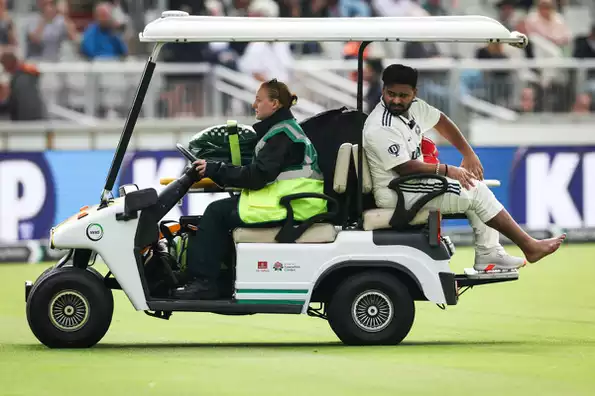
In a major step toward improving player safety and fairness in domestic cricket, the Board of Control for Cricket in India (BCCI) has introduced a 'Serious Injury Replacement' rule for the 2025–26 domestic season. The move comes in the wake of high-profile injuries to Rishabh Pant and Chris Woakes during the recent Anderson-Tendulkar Test series in England.
The rule will be applicable only in multi-day formats, such as the Ranji Trophy and CK Nayudu Trophy, and allows teams to field a like-for-like substitute if a player sustains a serious injury during play.
Injury During Play Now Grounds for Replacement
According to the new playing conditions, a replacement will be permitted only if the injury:
-
Occurs during live play and within the field of play
-
Is caused by an external blow
-
Results in fracture, deep cut, dislocation, or a similarly severe injury
-
Renders the player unfit to continue in the match
Once the injury is deemed serious, the team can apply to the match referee for a replacement using a standard request form. The substitute must be one of the nominated players at the toss—except in the case of wicketkeepers, where exceptions may be made.
The on-field umpires, in consultation with the match referee and medical staff, will be the final decision-makers regarding the extent and severity of the injury.
Mixed Reactions from the Cricketing World
The rule change, while welcomed by many, has also sparked debate. Former India opener Gautam Gambhir strongly backed the move, citing the incident where Pant fractured his foot during the fourth Test in Manchester.
“It’s very important to have this rule where you can get a substitute – that is, if it’s very visible,” Gambhir said. “Imagine if we had to play with 10 men against 11. How unfortunate would that be?”
England captain Ben Stokes, however, opposed the concept.
“It’s absolutely ridiculous that there’s a conversation around injury replacements,” Stokes said. “Injuries are part of the game. You pick your eleven for a game.”
Ironically, Stokes’ own teammate Chris Woakes dislocated his shoulder during the next Test at The Oval, but Stokes maintained his stance against the rule.
No Application in White-Ball Formats
The BCCI clarified that this rule would not apply to white-ball tournaments like the Syed Mushtaq Ali Trophy or Vijay Hazare Trophy, nor is it yet confirmed for implementation in the IPL. For now, it will be implemented in the upcoming multi-day Under-19 CK Nayudu Trophy and domestic red-ball competitions.
Detailed Guidelines for Serious Injury Replacement
Key highlights of the rule include:
-
Replacement must be like-for-like and not offer unfair advantage
-
Match referee can approve or deny the replacement
-
Replaced players will be considered as having played the match for stats
-
Wicketkeeper replacements may be allowed from outside nominated players if no backup keeper is listed
-
All warnings, suspensions, and penalties will carry over to the replacement
Once approved, the injured player cannot return, and both the replaced and replacement will be recorded as having participated.
Other Notable Rule Changes
Deliberate Short Run
A batter found deliberately running short to deceive the umpires will be penalized. Umpires will also ask the fielding captain to decide which batter will face the next delivery.
Retiring Batsman
If a batter retires for reasons other than injury or illness, he will be recorded as 'Retired – out' and cannot return to the innings, even with the opposing captain's consent.
This landmark update reflects the BCCI's effort to prioritize player safety and modernize domestic playing conditions. Whether the International Cricket Council (ICC) adopts a similar approach at the international level remains to be seen.