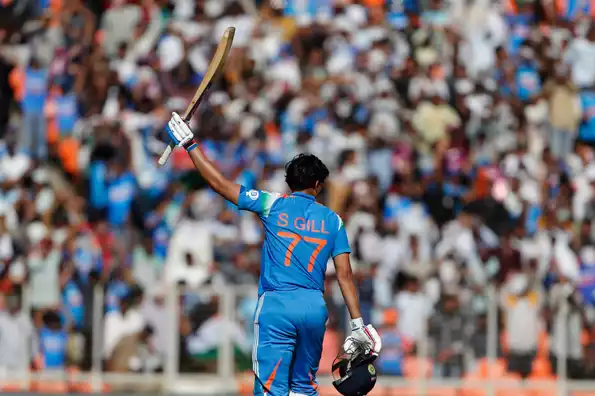
Gill’s Vice-Captaincy a Strong Signal Amid India’s Asia Cup Selection Shuffle
The recent announcement of India’s squad for the upcoming Asia Cup has stirred conversations far beyond the official word from the selectors. While chief selector Ajit Agarkar was non-committal about Shubman Gill’s place in the playing XI, his appointment as vice-captain has effectively sealed his inclusion, forcing a reshuffle in the top order.
Agarkar downplayed the significance of Gill’s appointment, stating, “Now that he is available, it is their (team management's) headache to pick the batting lineup. Our headache to pick the XV.” However, Gill’s elevation to vice-captain is widely seen as a clear signal of his indispensability. The selectors, it appears, are keen to ensure his recent rich vein of form doesn’t go underutilized.
Gill has been in sublime touch, particularly in the Test series in England where he amassed over 750 runs in five matches. The selection panel views this as a momentum worth carrying into the shorter formats. Agarkar clarified that Gill was never dropped from the T20I setup, and his absence over the past year was due to commitments in other formats.
Having opened in all 21 T20Is he has played, Gill is set to return to the top of the order alongside Abhishek Sharma. This return is expected to edge out Sanju Samson, who had been filling in as an opener in Gill’s absence. Samson’s recent performances in the five-match T20I series against England—scores of 26, 5, 3, 1, and 16—have not helped his cause.
Although retained in the squad, Samson is now likely to play more of a backup role, primarily as a specialist wicketkeeper. However, Jitesh Sharma is tipped to take the gloves in the starting XI, adding depth to the batting. While Samson and Jitesh are not direct replacements for each other, the selectors appear comfortable with the current combination.
Cricketing legend Sunil Gavaskar has offered a different perspective, advocating for Samson’s inclusion lower down the order. “He can still be in the team as somebody batting down the order. He can bat at 5 or 6. He shouldn’t be left out, after all he’s the wicketkeeper. Sanju is a very gifted player; he can adapt,” Gavaskar told Sports Today.
Gill’s inclusion also meant tough luck for Yashasvi Jaiswal, who has been left out despite consistent performances. The selectors were wary of including four opening options for a maximum of seven matches in the tournament. Agarkar admitted that Jaiswal was “unlucky,” much like Shreyas Iyer, whose omission has sparked sharp criticism on social media. Agarkar insisted there was no fault on either side—neither the player’s nor the selectors’.
Another notable inclusion was Shivam Dube, whose selection has drawn mixed reactions. Despite bowling just two overs in the last IPL season for Chennai Super Kings, the selectors continue to back him as a genuine all-round option. Dube is said to bowl regularly at the National Cricket Academy’s Centre of Excellence in Bengaluru, and the selection committee appears to have taken a long-term view of his utility.
The Asia Cup squad announcement has therefore done more than just name 15 players—it has revealed the selectors’ evolving roadmap for India’s T20 side, and more pointedly, the growing leadership role being carved out for Shubman Gill.