Cricket Faces Financial Blow as Real Money Gaming Ban Takes Effect
The Indian cricket economy has taken a significant hit following the government's recent ban on real money gaming. This move has triggered a domino effect throughout the sporting ecosystem, from jersey sponsorships to individual player endorsements, potentially reshaping the financial structure of Indian cricket.
Dream11 Exit Just the Beginning
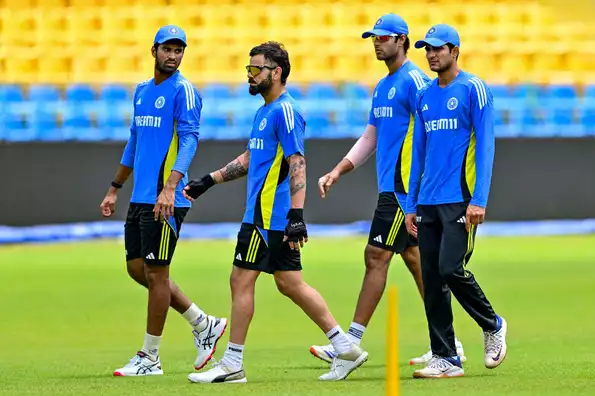
The first visible impact was the exit of Dream11 as the Indian cricket team's jersey sponsor. While the Board of Control for Cricket in India (BCCI) is expected to recover quickly—possibly securing a new sponsor before the Asia Cup kicks off in the next fortnight—the broader repercussions of the ban are far more severe and widespread.
Real money gaming companies had become the lifeblood of sports sponsorship in India, especially in cricket. With the ban in place, these firms have been forced to halt not just operations, but also advertising and promotional activities, resulting in an immediate and substantial financial vacuum.
Cricketers Set to Lose Crores in Endorsements
Cricketers, who had become prime ambassadors for fantasy and real money gaming apps, will bear the brunt of the crackdown. Major stars such as Virat Kohli, MS Dhoni, Rohit Sharma, Jasprit Bumrah, KL Rahul, and Rishabh Pant were all associated with platforms like Dream11, MPL, Winzo, and My11 Circle.
-
Virat Kohli’s annual contract with MPL was estimated at INR 10-12 crore.
-
Rohit Sharma and MS Dhoni were reportedly earning around INR 6-7 crore annually.
-
Younger players typically earned around INR 1 crore each through such endorsements.
Estimates suggest that Indian cricketers collectively stand to lose between INR 150-200 crore annually due to these terminated contracts. For elite players, the impact may only be a 5-10% reduction in endorsement income. However, for mid-tier and emerging players, the fallout could range from 50% to 100%, completely wiping out their endorsement earnings in some cases.
Players like Mohammed Siraj and Washington Sundar, each of whom were associated with three brands, are expected to see a 33% dip in endorsement revenue. Others who solely relied on gaming companies for brand deals could be left with no commercial deals at all.
IPL and Franchise Revenues Under Pressure
Beyond individual players, the IPL itself faces a significant financial shake-up. My11 Circle, an associate sponsor of the IPL, contributes INR 125 crore annually and still has three years left on its five-year contract. The BCCI will now need to fill this gap swiftly.
Franchises including Kolkata Knight Riders (KKR), Lucknow Super Giants (LSG), and Sunrisers Hyderabad (SRH) have also been affected, having relied on real money gaming sponsors for revenues of INR 10-20 crore per year.
The damage doesn't stop at the top. Smaller tournaments, legends leagues, and domestic/state-level cricket competitions—many of which depended on gaming company sponsorship—are also expected to lose vital revenue streams.
Ad Industry Faces ₹10,000 Crore Black Hole
The ban’s repercussions extend to the broader advertising industry. According to Karan Taurani, Executive VP at Elara Capital, real money gaming firms accounted for 7-8% of India’s total ad spend and nearly 15-20% of digital ad spend.
"Roughly 80% of that will now vanish," Taurani said, projecting a loss of INR 8,000-10,000 crore annually in ad revenues. Much of this was previously directed toward cricket promotions, brand partnerships, and team sponsorships.
The decline in ad revenue is expected to result in a 20-25% drop in cricketers' endorsement income across the board, a hit that could influence their overall brand value.
About the Bill
The Promotion and Regulation of Online Gaming Bill, 2025, passed recently by the Indian government, was introduced to curb the harmful effects of online money games. Prime Minister Narendra Modi called the bill a step to "save our society from the harmful effects of online money games."
The legislation imposes a complete ban on real money games and their advertisements across all forms of media. Financial pathways facilitating these transactions have also been shut down.
The bill provides for a national-level regulatory authority that will oversee:
-
Registration and categorisation of online games
-
Determination of whether a game qualifies as a 'money game'
-
Complaint redressal and code of practice enforcement
Violators could face up to three years in prison and fines up to INR 1 crore.
Critics, however, have raised concerns, arguing that the bill might push gamers toward illegal betting platforms. Comparisons have also been drawn to other socially harmful industries such as alcohol and gambling, which continue to operate with regulation rather than prohibition.
Summary
The ban on real money gaming has sent shockwaves through the cricketing ecosystem, with players, franchises, and advertisers scrambling to recalibrate. While top-tier cricketers and organizations like the BCCI may weather the storm, the future remains uncertain for many others whose incomes were tied directly to the now-defunct partnerships with gaming companies.