Can India’s Unshackled Next Gen Carry Forward Old Lessons?
As India heads into the Asia Cup — their first multi-nation T20 tournament since winning the T20 World Cup and the last before hosting the next edition — the focus is no longer on whether they can play fearless cricket, but whether they can sustain that approach when it matters most.
This new Indian T20 team has already shown glimpses of a transformed mindset. The shift from conservative to aggressive cricket is embodied in a simple phrase heard during a game against Bangladesh: "Maarte jao" — "just keep hitting." It was the message given to Rinku Singh walking in at 41/3, and it marked a clear departure from the caution-first approach that once defined Indian cricket.
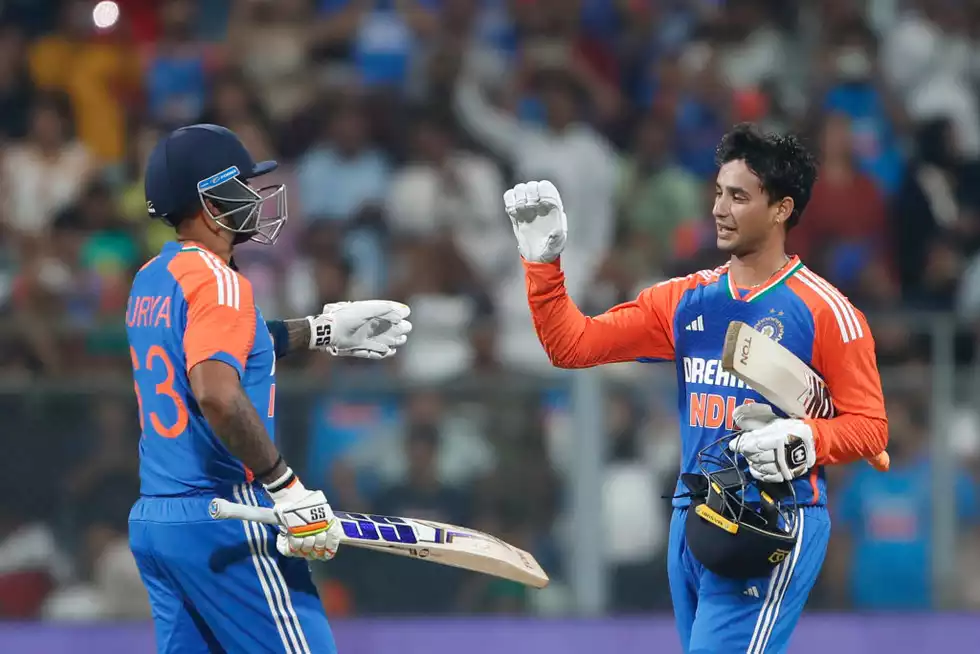
The transformation has been led by Suryakumar Yadav, now captain, who has walked the talk with blistering performances — 80 off 42 in Vizag and 58 off 26 in Sri Lanka — both Player-of-the-Match outings on debut as captain. Suryakumar has echoed the philosophy of his predecessor Rohit Sharma, who not only led with intent during the ODI World Cup but also translated that aggression into the shortest format, exemplified by a 19-ball fifty against Australia in the T20 World Cup.
Rohit’s approach, built on risk-taking and attacking from the outset, began to unshackle India’s traditional conservatism — a style rooted in the grind of domestic cricket, where playing safe was a career necessity. The introduction of the Impact Player rule in the IPL in 2023 further accelerated this change. With the safety net of an additional batter, Indian players were suddenly free to take risks without fear of immediate repercussions.
India’s evolution was also marked by scars — particularly from the 2021 and 2022 T20 World Cups, where hesitancy and caution cost them dearly. These losses sparked a deeper cultural reset, one that is now bearing fruit.
Evidence of the shift came in Zimbabwe earlier this year. After losing the series opener, India bounced back decisively, with Abhishek Sharma's 47-ball century setting the tone. It wasn’t just about winning — it was how they did it: with aggression, self-belief, and no backward steps. They took the series 4-1.
That momentum carried into South Africa, where an inexperienced squad, stripped of its senior stars, outplayed the hosts 3-1. Tilak Varma scored back-to-back centuries after requesting the No. 3 slot. Sanju Samson added another hundred. These were not one-off performances, but signs of a deeper conviction running through the team.
Even in home conditions against England, India’s refusal to back down stood out. Samson’s repeated dismissals to Jofra Archer's short balls became symbolic. Five matches, five dismissals to the same ploy — yet he never retreated. It wasn’t about winning personal battles, but about standing up to pressure without folding.
The Asia Cup now becomes a key checkpoint. With both Rohit Sharma and Virat Kohli no longer in India’s T20 plans, the next generation led by Suryakumar Yadav has taken the mantle. The path ahead is paved with opportunities, but also with expectations.
This tournament will test whether India’s aggressive brand of cricket — forged in bilateral series and shaped by IPL innovations — can withstand the high-stakes pressure of a multi-nation event. It will test whether “maarte jao” remains a rallying cry or fades when the spotlight intensifies and old instincts threaten to return.
India has shown they can play bold. The real challenge now is doing it when it counts the most.