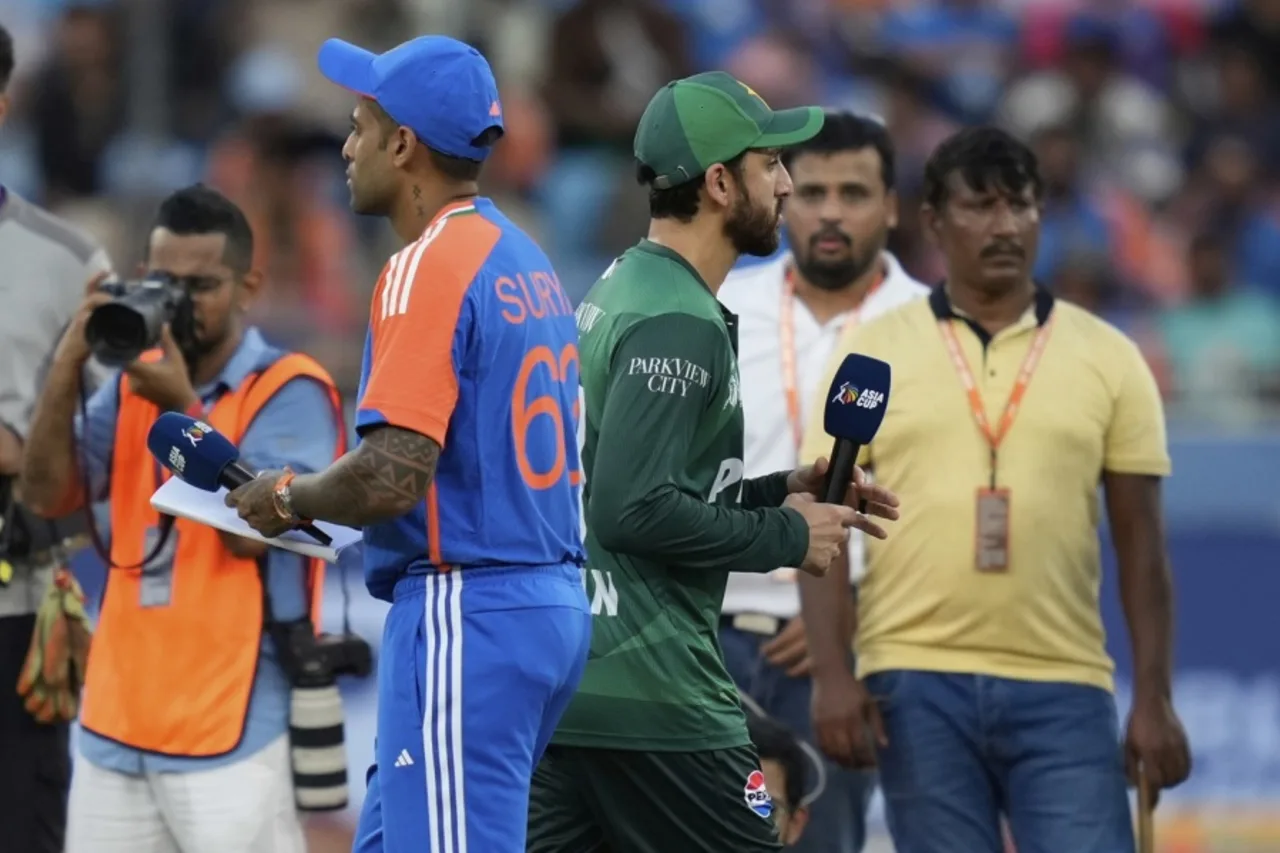
India Skip Handshakes with Pakistan in Asia Cup Clash; Agha Salman Boycotts Presentation
India’s seven-wicket win over Pakistan in the Asia Cup was overshadowed by political tensions as the Indian team, led by captain Suryakumar Yadav, refused to exchange handshakes with the opposition before and after the match.
The gesture — or lack thereof — was a premeditated move, Suryakumar confirmed in the post-match press conference, saying it was taken in alignment with the Board of Control for Cricket in India (BCCI) and the Indian government. This marked the first meeting between the arch-rivals since the Pahalgam terror attack in April, which had raised questions over the match’s feasibility in the months leading up to the tournament.
“Our government and BCCI – we were aligned today,” Suryakumar said. “We came here to just play the game. We have given a proper reply.” He added, “Few things in life are ahead of sportsman spirit also. We stand with all the victims of Pahalgam terror attacks, stand with their families, and express our solidarity.”
The decision appeared to catch Pakistan off guard. Head coach Mike Hesson revealed that the players had lined up post-match for handshakes, only to realize India had already returned to the dressing room.
“We obviously are disappointed,” Hesson said. “We went over there to shake hands and they’d already gone into the changing room. That was a disappointing way for the match to finish.”
The fallout extended to the post-match presentation ceremony, where Pakistan captain Salman Agha was notably absent. Hesson confirmed his no-show was a direct result of India’s actions, calling it a “follow-on effect.” The Pakistan Cricket Board (PCB) also issued a statement condemning India’s behavior as “against sportsmanship.”
In a further twist, the PCB revealed that a formal protest had been lodged against match referee Andy Pycroft. According to the board, Pycroft had “requested the captains not to shake hands during the toss” — a move the PCB deemed unacceptable. The match referee’s response is still awaited.
This Asia Cup encounter had already been played under a cloud of political strain. India and Pakistan had not played since the April attack, and doubts loomed over whether the match would go ahead at all. A resolution came only after the Indian government clarified its position: while bilateral ties remain frozen, multilateral sporting engagements such as the Asia Cup would proceed.
Despite the off-field drama, India put in a dominant performance on the field, with contributions from Kuldeep Yadav, Axar Patel, and Abhishek Sharma sealing the victory. But the lasting image from Dubai may not be India’s cricketing excellence — rather, it was the absence of the customary handshake, underscoring how deeply political tensions continue to influence even the realm of sport.