The Big Bang of Women’s Cricket: Batting Boom, Spin Surge, and India at the Centre of World Cup 2025
The women’s cricket landscape is on the brink of a revolution, and the 2025 ICC Women’s World Cup, set to be hosted in India and Sri Lanka, promises to be its epicenter. From batting explosions to a spin renaissance, and India’s re-emergence as a true powerhouse, all signs point to this tournament being a game-changer for the women’s game.
From Map Marker to Milestone
The 2017 Women’s World Cup put women's cricket on the global map. Now, eight years later, the 2025 edition is poised to redefine its future. It’s the first ICC event in India in nearly a decade, and the timing couldn't be more perfect. India, along with traditional giants Australia and England, stands at the top of the ICC ODI rankings, and is one of just three teams with a positive win-loss record in this cycle.
The massive popularity of the Women's Premier League (WPL), launched in India in 2023, has catalyzed a transformation. Its impact on batting standards, player confidence, and the fan base is already being felt – and will surely shape the narrative of this World Cup.
A Run-Scoring Revolution
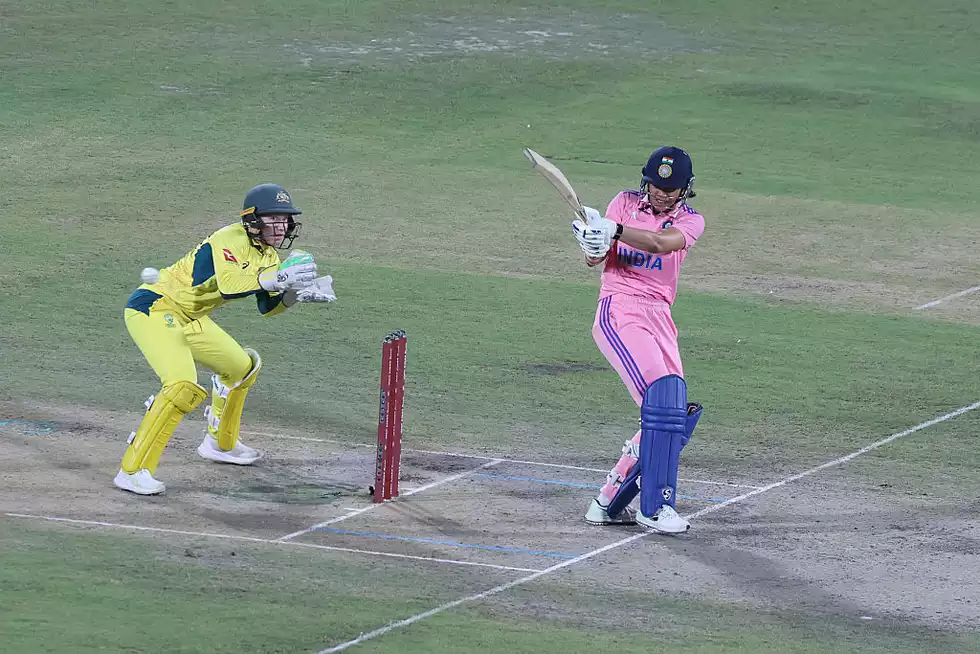
The 2025 World Cup is expected to be the highest-scoring in history – and there's data to back it. A recent ODI between India and Australia in Delhi set a new benchmark with 781 runs – the highest match aggregate in women’s ODI history. And this isn’t an outlier. Of the 21 highest-scoring ODIs ever, 16 have occurred in the current World Cup cycle (2022-25), with 11 since December 2024 alone.
In fact, the current cycle has already seen:
-
Scoring rate: 5.05 runs per over – the first time it's crossed five in a World Cup cycle.
-
Centuries: 30 hundreds already in 2025.
-
Sixes: 203 sixes in just 53 ODIs – just five short of the all-time annual record.
-
300+ totals: 34, nearly double the 19 from the previous cycle.
Cycle comparison: The rise of the batters
| Cycle | Matches | Run Rate | Batting Avg | 300+ Totals |
|---|---|---|---|---|
| 2022-25 | 166 | 5.05 | 29.66 | 34 |
| 2017-22 | 185 | 4.55 | 27.23 | 19 |
| 2013-17 | 186 | 4.13 | 25.52 | 10 |
India and Sri Lanka, the co-hosts, have seen dramatic upticks in scoring rates – up over 20% compared to the previous cycle. India's current ODI run rate of 5.64 is their highest ever, while Sri Lanka's has jumped from 3.74 to 4.69.
Batting Fireworks at Home
Indian pitches have become a batting paradise in this cycle. In the 18 ODIs hosted in India since the last World Cup, the run rate has been a staggering 5.66. Nine 300+ totals have come in this span – more than half of India’s all-time tally in women’s ODIs.
Sri Lanka too has seen a dramatic shift. From just one 300+ total in its history prior to 2022, the country has now witnessed five in the current cycle alone.
However, some uncertainty looms. Three of the four Indian venues – Guwahati, Indore, and Navi Mumbai – have never hosted women’s ODIs, and past domestic 50-over games at these venues have generally been low-scoring.
Batting Depth & Death Overs Domination
Another major evolution in women’s ODIs is the depth in batting. Lower-order contributions have improved markedly. For the first time in over a decade, batters at No. 6 and below are scoring faster and averaging more than ever.
-
In this cycle, there have already been two centuries from batters below No. 5, compared to zero in the previous one.
-
The share of centuries from top-3 batters has dropped from 87.1% to 73.5%, showing that the middle and lower order are stepping up.
India has led the way in death-over acceleration. Their run rate in overs 41-50 has risen by 26.8%, from 6.01 to 7.62, the highest jump among all teams.
The Rise of the Spinners
Spin has taken centre stage in women’s ODIs. In the current cycle, spinners have bowled 56.6% of overs, up from 50% in the previous one. Eight of the top ten wicket-takers in this cycle are spinners, with the top seven all being slow bowlers.
| Team | Spin % (2022-25) | Spin % (2017-22) |
|---|---|---|
| Bangladesh | 78.7 | 63.5 |
| Sri Lanka | 74.3 | 69.2 |
| Pakistan | 69.2 | 68.6 |
| India | 58.2 | 63.1 |
| England | 46.9 | 36.1 |
India’s use of spin has slightly decreased, but they continue to rely heavily on it, often playing just one frontline pacer. England, meanwhile, have significantly upped their spin attack, picking four spinners for the World Cup – led by the world No. 1, Sophie Ecclestone.
Different Spins for Different Conditions
The impact of spin varies sharply between India and Sri Lanka:
-
In India, pitches have been flat, favoring wrist-spinners for their attacking variety. Wrist-spinners account for 21.2% of spin overs.
-
In Sri Lanka, where conditions aid turn, finger-spinners have dominated – especially under lights at the R. Premadasa Stadium, where 11 matches will be played. Finger-spinners have taken more wickets and conceded fewer runs, with wrist-spin accounting for just 7.2% of spin overs.
Day-Night Dynamics
Another major shift: this World Cup will be played almost entirely under lights. 30 of the 31 matches are day-night games – a huge increase from past editions. Seven of the eight teams have played more day-night games in this cycle than England did in the entire 2017-22 period. This will test team adaptability, particularly in Sri Lanka, where conditions become trickier at night due to turn and dew.
India: A Contender and a Catalyst
India is not just a host, but a genuine contender. With a powerful batting lineup, growing death-over firepower, home conditions tailored for big totals, and a fanbase energized by the WPL, India enters the 2025 World Cup with momentum on their side.
The country’s rise is also symbolic of the shift in global women’s cricket power – from a duopoly dominated by Australia and England, to a more diverse and unpredictable landscape.
Conclusion
The 2025 Women’s World Cup will not just crown a champion; it will signal the next phase in the evolution of the sport. With batters rewriting records, spinners crafting new narratives, and India firmly at the center, the tournament promises not just drama, but transformation.
Buckle up. Women's cricket is about to go supersonic.