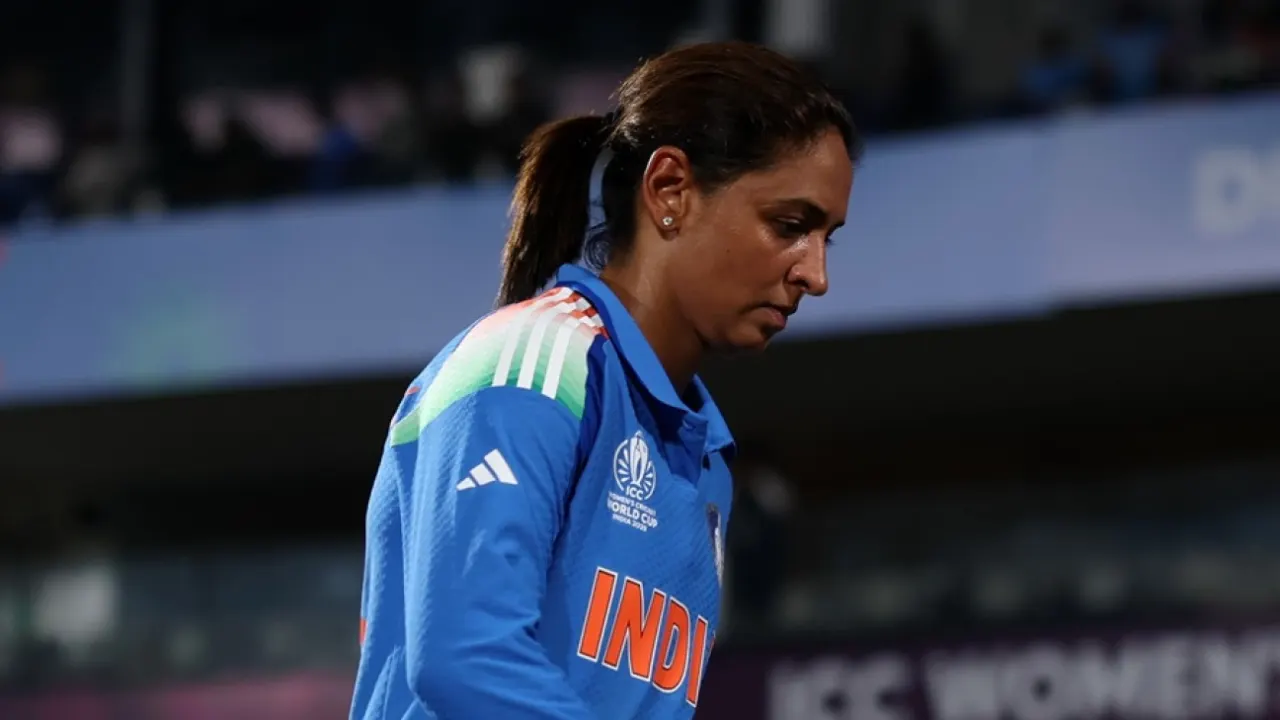
India rue lower-order collapse as Australia chase down record total in Women’s World Cup 2025
India’s hopes of a historic victory over Australia at the Women’s World Cup 2025 were dashed after a dramatic lower-order collapse saw them fall short of a par score on a flat batting pitch in Chennai. Despite posting 330 — the highest-ever total against Australia in women’s ODIs — India lost their last six wickets for just 36 runs, a collapse that proved costly as Australia successfully chased down the target in a high-scoring thriller.
India had been well-placed at 294 for 4 in the 43rd over, riding on half-centuries from openers Smriti Mandhana and Pratika Rawal. However, the final overs saw a flurry of wickets and a drop in scoring rate, leaving them all out with seven balls unused.
Speaking after the match, Indian captain Harmanpreet Kaur expressed regret at not capitalising on the strong foundation.
“The way we started, we thought if we could have added 30-40 more runs, it would have made a big difference,” Harmanpreet said. “We kept losing wickets and that really cost us because today’s pitch was totally different. We knew it was a good batting wicket, but those last six overs where we were not able to capitalise really cost us.”
The game followed a worrying pattern for India, who also failed to defend 251 against South Africa in an earlier fixture, again after being in control for much of the match.
Head coach Amol Muzumdar echoed Harmanpreet’s sentiments, stressing the importance of finishing both innings — with bat and ball — more effectively.
“In my opinion, the finish is very important in a cricket game,” Muzumdar said. “If we had scored another 20 runs, maybe things would have been different. These are learning moments. One of the key things we need to focus on is finishing well.”
India have now lost two games in a row — both while defending totals — with the opposition chasing down targets with seven and six balls to spare respectively. The team has so far relied on a five-bowler strategy, which is being closely scrutinised given the high-scoring nature of pitches in the tournament.
When asked if the team would consider adding a sixth bowling option, Harmanpreet remained non-committal but open to discussion.
“We’ll sit and discuss [about the five-bowler approach] because this combination has given us a lot of success in the past,” she said. “Two bad games are not going to make a big difference for us. There are a lot of things we need to sort out, and hopefully we’ll come up with the best approach.”
India’s next fixture is against England in Indore — another venue known for its batting-friendly conditions. Muzumdar confirmed that the team management would reassess their strategy ahead of that game.
Another concern for India has been their dot-ball percentage. Though the top five showed more intent against Australia, with five batters striking at over 100, India still had a 48% dot-ball rate — something Muzumdar admitted remains a work in progress.
“After the previous game, we had a long discussion about how to approach our batting innings,” he said. “We’ve been playing aggressive cricket in the last year-and-a-half. Today was a good display, and the dot-ball percentage has come down, but we’ll take a closer look at it.”
Despite the heartbreak, India remain in contention for the knockouts, but must address their finishing woes — both with the bat and the ball — to stay alive in the tournament.