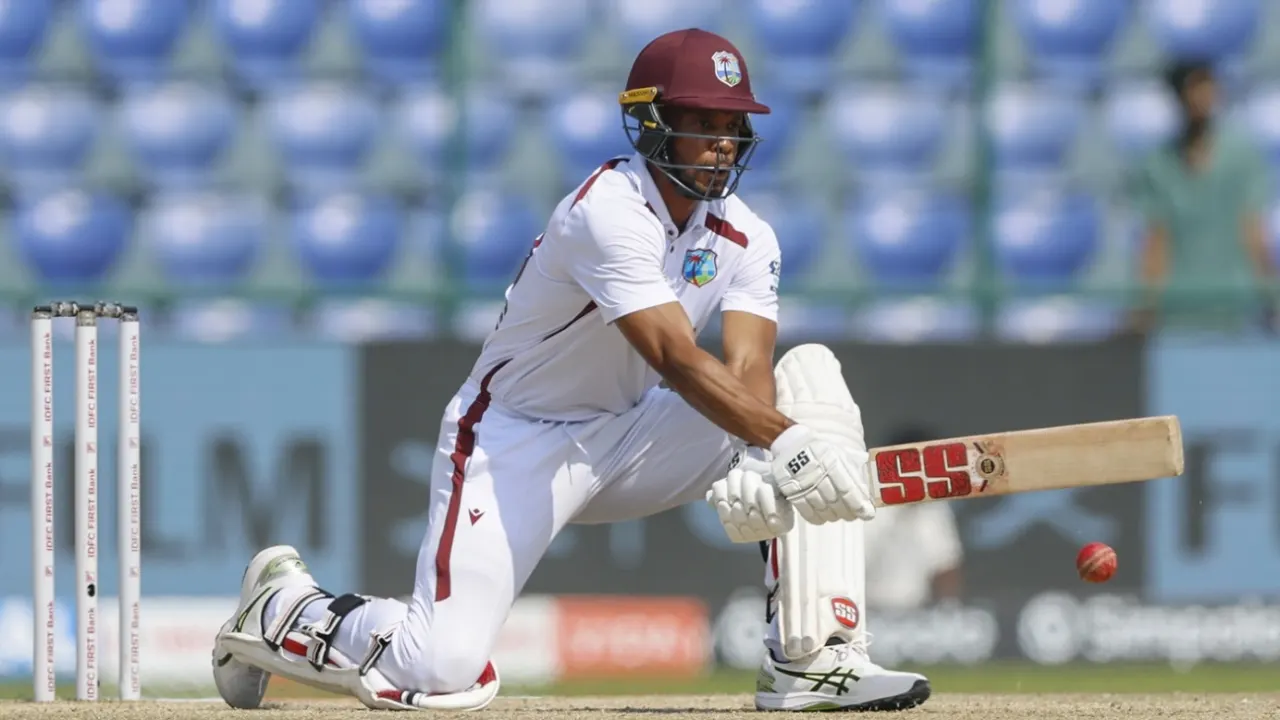
Roston Chase: India Tour a 'Stepping Stone' in West Indies' Test Journey
West Indies captain Roston Chase has labelled their recent tour of India as a "stepping stone" in the team's evolution as a competitive Test side, highlighting his team's improved performance in the second Test in Delhi as a key confidence booster despite a 2-0 series loss.
The visitors lost the final Test by seven wickets, but not before showcasing glimpses of progress — most notably through centuries from Shai Hope and John Campbell, and their longest batting efforts of the year, with both innings lasting over 80 overs. These were the first hundreds for West Indies in 2025, and came against a formidable Indian attack including Jasprit Bumrah, Ravindra Jadeja, and Kuldeep Yadav.
"Performance to build on"
“This is the kind of fight I wanted to see from us in earlier matches,” Chase said in the post-match press conference. “I think this is a stepping stone, a building step for us to improve as a Test-playing nation. This performance gives us confidence and belief that we can compete against top-tier Test teams.”
West Indies arrived in India missing two of their top pacers, Shamar Joseph and Alzarri Joseph, both sidelined by injury. However, Chase felt it was not the bowling, but the batting, that ultimately proved the weak link — an area he believes must improve if they are to make an impact in the ongoing World Test Championship (WTC) cycle.
Batting remains a concern
“I think where we could improve mainly is our batting,” Chase said. “That’s what let us down in the last two series. We have a good bowling attack, even with the injuries. If we can put up strong first-innings totals, we’ll be in a position to compete and possibly win Tests.”
One of the few positives was the record partnership between Hope and Campbell — the highest for West Indies in 2025 — which provided a template for what is possible if batters spend more time at the crease.
Lack of first-class experience hurting development
Chase also pointed to systemic issues within the Caribbean cricketing structure, especially the lack of first-class experience players bring into international cricket.
“When our players reach the international level, they’ve often played just 15 or 20 first-class matches,” he explained. “In contrast, players from other nations often have 80 or even 100 under their belts. So for us, it’s always about learning on the job.”
He called for patience and longer runs for new players in the Test setup so they can gradually adapt and improve at the highest level.
Justin Greaves impresses
One promising sign for West Indies was the performance of allrounder Justin Greaves, who batted at No. 7 in Delhi and finished unbeaten on 50, showing composure against India’s spinners.
“Actually, if we had batted first, he would’ve played at No. 6,” Chase said. “But because he bowled so many overs [14 out of 134.2], we pushed him down to give him a bit of rest. He’s a capable batsman — I’ve known him a long time, and I personally think his batting is better than his bowling.”
Looking ahead to 2026
West Indies will next face New Zealand in December, wrapping up a challenging 2025 that saw them face heavyweights Australia, India, and soon the Black Caps. Chase believes 2026 — with fixtures against mid-ranked sides like Pakistan and Sri Lanka — could provide a better opportunity to translate lessons into results.
“This first year was always going to be tough,” he admitted. “But if we learn from what we’ve done in these games and carry those lessons into 2026, I think we can be a lot more competitive, especially against teams closer to us in the rankings.”
Key Takeaways:
-
Roston Chase sees 2nd Test performance as a turning point for West Indies.
-
Centuries from Hope and Campbell and improved batting time were major positives.
-
Lack of domestic first-class experience remains a developmental challenge.
-
Allrounder Justin Greaves praised for his composed innings in Delhi.
-
West Indies aim to build on hard lessons in 2026 with more favourable fixtures.