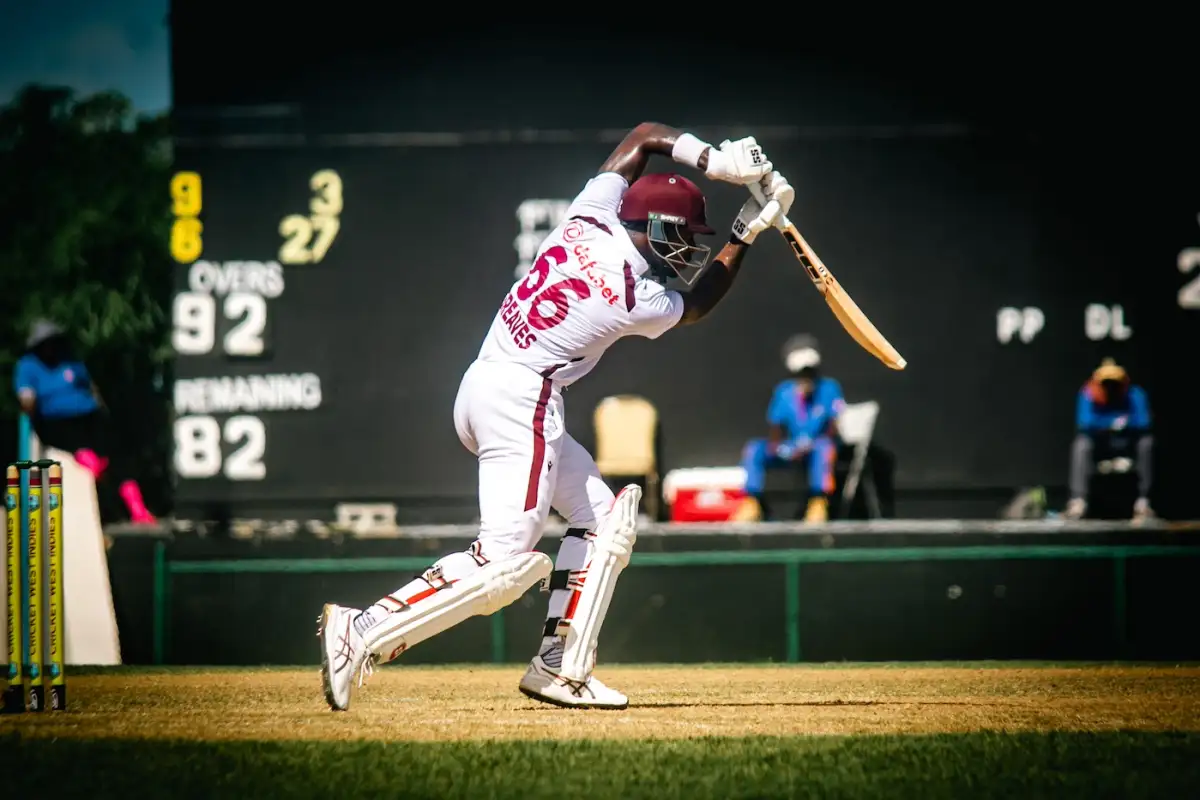
Greaves’ Epic Double Ton Leads West Indies to Heroic Draw in Christchurch
A monumental final-day rearguard from Justin Greaves, Shai Hope, and veteran Kemar Roach secured West Indies a thrilling draw against New Zealand in Christchurch, earning their first points of the 2025–27 World Test Championship cycle. The visitors survived 163.3 overs in the fourth innings — their longest final-innings resistance in 95 years — to close on 457 for 6 while chasing an improbable 531.
Greaves was the heartbeat of the escape, crafting a remarkable maiden Test double-century and finishing unbeaten on 202 from 388 balls. In a single innings, he faced more than half the deliveries of his entire 12-Test career, transforming from stylistic strokemaker into immovable wall as he absorbed blows, battled cramps, and resisted every temptation to attack.
His effort followed a crucial 196-run partnership with Shai Hope, whose composed 140 resurrected the innings after West Indies stumbled to 92 for 4 on Day 3. Hope’s dismissal, shortly followed by Tevin Imlach’s, left New Zealand sensing victory with West Indies reeling early on the final morning at 277 for 6.
But Roach, in his comeback Test at age 37, produced the grittiest innings of his career, finishing 58 not out from 233 balls. He scored only 5 runs from his last 104 deliveries, but his determination proved priceless. Together, he and Greaves batted out the final two sessions, repelling a depleted New Zealand attack down to two frontline quicks, Zak Foulkes and Jacob Duffy, both visibly fatigued.
New Zealand were left frustrated by missed chances: Roach was dropped on 30, survived a missed run-out on 35, and was reprieved again on 47 when a mix-up between substitutes Glenn Phillips and Blair Tickner spoiled a catching opportunity at mid-on. Their final hopes faded after burning their reviews, leaving on-field umpire Alex Wharf to negotiate tight calls — including one excellent decision to deny a supposed inside edge that replays later vindicated.
Even the second new ball, taken swiftly after New Zealand rushed through overs of part-time spin, offered little assistance on an increasingly docile Hagley Oval pitch. Misfields crept in, signs of a tiring home side desperate for one more breakthrough.
Duffy briefly lifted spirits with a sharp short ball that had Hope gloving behind, brilliantly caught by Tom Latham, before Imlach was trapped soon after. But Greaves and Roach refused to budge. Greaves, despite approaching his milestone, declined every risky scoring opportunity, focusing solely on survival until he finally reached his double century in the penultimate over with a sliced boundary over backward point — only his second four of the final session.
By then, the chase had long been abandoned; survival was the mission, and West Indies achieved it with unflinching discipline.
New Zealand’s declaration at 466 for 8, built on Rachin Ravindra’s 176 and Tom Latham’s 145, and Duffy’s earlier five-wicket haul in the first innings seemed set to deliver them victory. But the final day belonged to West Indies — and to the enduring drama of Test cricket.
Their gritty draw, earned the hard way, may prove more valuable than any narrow defeat avoided. It was a day that served as a powerful reminder of Test cricket’s unmatched capacity for slow-burn, high-stakes theatre.