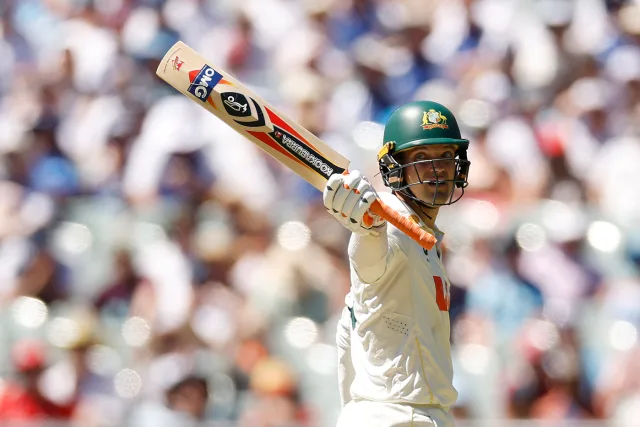
Carey Century Keeps Australia in the Game as Relentless Ashes Drama Continues
Alex Carey’s maiden Ashes century helped Australia stay afloat on a chaotic opening day of the third Test at Adelaide Oval, as the series showed no signs of slowing down just a week into a breathless contest.
In front of a record-breaking crowd of 56,298, Carey’s counterattacking hundred proved the centrepiece of another frenetic day, though by stumps it remained unclear whether England had dragged themselves back into the series or whether Australia had already edged closer to a decisive advantage.
The only moment of calm came before play began, when players and spectators observed a moving tribute to the victims of the Bondi terror attack. What followed was a day marked by constant upheaval, beginning just 45 minutes before the toss when Steven Smith was ruled out with vertigo. His late withdrawal handed Usman Khawaja a surprise reprieve, one that may yet prove significant for both the match and his Test career.
England’s bowlers began the day under pressure on a sweltering morning, but Australia soon handed momentum back with a damaging collapse. Five wickets fell in quick succession, six of the top eight dismissed cheaply, with the most decisive blow coming immediately after lunch. Jofra Archer struck twice in three balls, igniting England’s fightback in what appeared a pointed response to criticism following the defeat in Brisbane.
Khawaja’s fortunes also swung dramatically. Dropped at slip by Harry Brook on five, he capitalised on the chance, shedding early caution to punish loose deliveries from an inconsistent England attack. Later in the day, controversy resurfaced when Carey survived a caught-behind appeal on 72 after a DRS review. Former ICC umpire Simon Taufel later described the decision as another failure of “technology calibration,” while Carey admitted he believed he had edged the ball.
Despite the turbulence, Carey’s century gave Australia vital resistance. England’s standout performer was Archer, whose disciplined spell of 3 for 29 from 16 overs stood in stark contrast to the struggles of the rest of the attack. His pace and control mirrored the impact Mitchell Starc has had earlier in the series for Australia, forcing errors through sustained pressure.
Australia’s scoring rate dipped below four an over largely due to Archer’s influence, but the hosts will still feel they missed an opportunity to seize complete control after winning the toss. Historically dominant when batting first at Adelaide, Australia have surpassed 439 in every such innings this century except one — the famous 245 all out in England’s 2010–11 victory.
With Starc unbeaten on 29 at stumps, Australia will hope he can once again shepherd the tail on the second morning. However, with a relatively new ball and an England side showing renewed fight, attention is likely to soon turn to England’s batters and whether they have learned from the costly mistakes that have defined their series so far.