Ashes Fallout: Rob Key Admits New Zealand White-Ball Tour Was a Planning Error
England men’s managing director Rob Key has conceded that sending a significant portion of the Ashes squad on a white-ball tour of New Zealand was a mistake, as England’s disastrous Ashes campaign continued to unravel with the team trailing 3–0 inside 11 days.
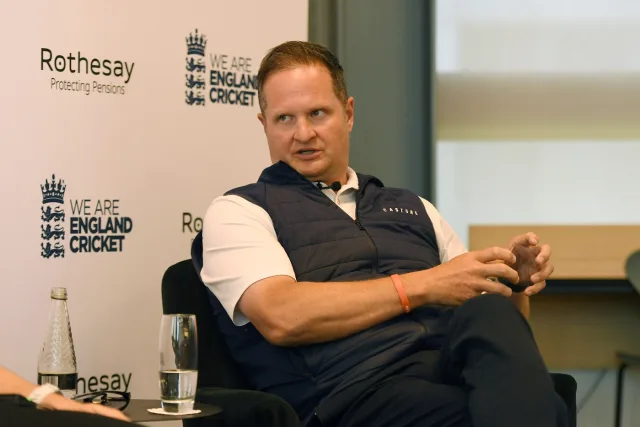
Speaking to British media at the MCG two days before Christmas, a contrite Key faced intense scrutiny over England’s performances, preparation, and the future of the current leadership group. England’s hopes of doing things “differently” under the Ben Stokes–Brendon McCullum era have once again ended in a familiar Ashes collapse, prompting questions about jobs, culture, and the wider structure of English cricket.
“My overwhelming feeling, apart from the disappointment, is that we’re so much better than what we’ve played,” Key said. “We haven’t helped the players get to their best, and that’s on us as a set-up.”
Preparation Under Fire
Key identified three major issues behind England’s struggles: flawed Ashes preparation, the absence of specialist coaches, and poor decision-making by players on the field. He accepted responsibility for the first two and acknowledged their influence on the third.
Central to that preparation was England’s decision to tour New Zealand for T20Is and ODIs in October, with several Ashes-bound players involved. England lost both series, including all three ODIs, and many key batters struggled in seaming conditions. Joe Root, Ben Duckett, Jamie Smith and Jacob Bethell all recorded low averages, leaving little time to recover form before the Ashes.
“We ended up in tough early-season conditions out in New Zealand, where the batters probably did more harm than good,” Key admitted. “Then you’re chasing it, because one part of the preparation has gone, and you can’t suddenly flip everything.”
England also declined the opportunity to play a warm-up match against an Australian representative XI in Adelaide, opting instead for a low-key three-day fixture at Perth’s Lilac Hill, a decision that has since drawn criticism.
Coaching Gaps and On-Field Decisions
England have also toured Australia without a dedicated bowling or fielding coach. Since the end of the 2022 home summer, the bowling role has been shared informally, while no specialist fielding coach has been in place. An inexperienced seam attack has struggled for consistency, particularly after a promising start to the series.
Key also alluded to frustration with on-field decision-making, drawing a clear distinction between positive aggression and what he described as “dumb” cricket.
“There’s a real difference between aggression and dumb,” he said. “Sometimes we take dumb options. Looking to ramp bowlers early when you’re on 10 — that’s dumb cricket.”
Though he did not name individuals, the comments were widely interpreted as a reference to Harry Brook’s dismissals in Adelaide.
Uncertain Futures, Continued Backing
Despite the bleak outlook, Key insisted the dressing room remains unified and said he continues to back head coach Brendon McCullum, while acknowledging the need for evolution in approach.
“There’s no question we have to evolve again,” Key said. “There’s still life in this, but we have to make sure we’re doing things better.”
Key’s own future remains uncertain, with any decision to be made by the ECB board. Chairman Richard Thompson is currently in Australia, while chief executive Richard Gould is due to return for the Sydney Test.
England face Australia in the fourth Test at the MCG with the series already lost, and the prospect of another heavy defeat looming. For Key and the leadership group, the remainder of the tour may prove critical not just to England’s pride, but to the survival of the regime itself.