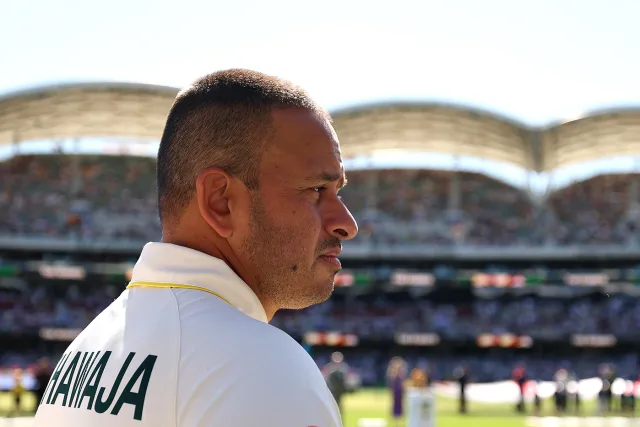
Khawaja Locked In for Sydney Test Amid Uncertainty Over Future
Australia head coach Andrew McDonald has confirmed that Usman Khawaja will be selected for the fifth and final Ashes Test in Sydney, dismissing speculation about the veteran opener’s immediate future while conceding that Australia’s batting unit is not operating at full capacity.
Khawaja’s future has come under scrutiny ahead of the Sydney Test, particularly after he recently turned 39 and with Australia not scheduled to play another Test for eight months following the conclusion of the Ashes, until Bangladesh tour in August next year. However, McDonald said selectors have received no indication from Khawaja that he is considering retirement.
“We’ve been really clear that we haven’t had a conversation,” McDonald said ahead of training. “The speculation has been from the external. He’s with his family at the moment, having a couple of days off. There’s no indication at my end that he’s calling it in Sydney.
“His performance in this calendar year has been good enough to warrant selection, so I’d say he’d be there marking centre in Sydney.”
Khawaja began the series as Australia’s established opener but has endured a disrupted campaign. Back spasms forced him out of the Perth Test and the entire Brisbane match. He was initially omitted for Adelaide before being recalled just 45 minutes before the toss due to Steven Smith’s illness, batting at No. 4 and scoring 82 and 40. He retained his place for the Melbourne Test, contributing 29 in difficult batting conditions.
McDonald acknowledged the broader challenge of managing transitions when senior players approach the end of their careers. “If any of our great players retire, you want to acknowledge them. But until you’re clear on someone’s future, it’s very difficult,” he said.
The coach also addressed Cameron Green’s unsettled role in the batting order, noting that the allrounder has batted in five different positions across his last five Tests. Green missed the optional training session at the MCG on Monday, as did Khawaja, while Beau Webster flew to Hobart to play a Big Bash League match for the Hurricanes before rejoining the Test squad in Sydney later in the week.
“He fits around others at the moment,” McDonald said of Green. “He hasn’t nailed down the spot.”
Green was moved from No. 5 to No. 7 in Melbourne, batting behind Alex Carey, who has been locked in at No. 6 following scores of 63, 106 and 72 in Brisbane and Adelaide. Green’s modest returns this series—24, 45, 0, 7, 17 and 19—have led to calls for Webster to replace him. While McDonald said it was difficult to make changes after one Test on a challenging surface, he confirmed Webster would be considered for Sydney, particularly with World Test Championship points at stake.
“It’s a nice problem to have when people are talking about someone unlucky to miss out,” McDonald said. “We know we’ve got a quality player sitting there waiting. We’ve got a batting order that we’d like to think can function at a higher capacity, so we’ll be having conversations leading into Sydney.”
McDonald also highlighted concerns around Marnus Labuschagne’s intent at the crease. After starting the series strongly, striking at 73.56 in the first two Tests and scoring two half-centuries, Labuschagne has slowed considerably, scoring just 46 runs from 122 balls across the Adelaide and Melbourne Tests.
“When he loses his intent to score, he gets himself in bad positions,” McDonald said. “There are periods where he goes back into his shell and trusts his defence too much. We think it’s a mindset piece. When he’s positive and busy, he’s at his best.”
Despite a lean run, McDonald backed Labuschagne’s quality, pointing out his career average of over 40 in Test cricket. “He’s had a lean period, but he’s a quality player,” he said.
With selection debates intensifying and the final Ashes Test looming, Australia’s selectors face key decisions as they look to extract more from a batting line-up capable of greater output.