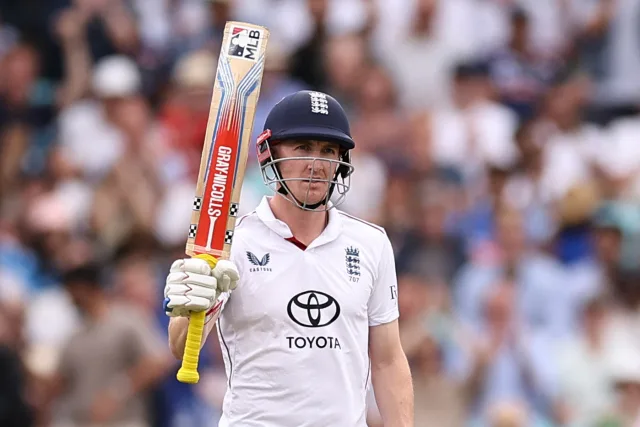
Brook Admits Lying to Protect Team-Mates After Nightclub Incident
England white-ball captain Harry Brook has admitted he was not truthful about the circumstances surrounding a nightclub incident in Wellington last October, saying he lied in an attempt to protect his team-mates from being implicated.
Brook was punched by a nightclub bouncer on the eve of England’s third ODI against New Zealand, an incident that later led to disciplinary action by the Cricket Regulator. At the time, Brook claimed he had been out alone. He has now acknowledged that other players were present and that his earlier account was incomplete.
In a statement released following England’s victory in the first T20I against Sri Lanka, Brook accepted responsibility for his actions and conceded he still has lessons to learn about leadership off the field.
“I accept responsibility for my actions in Wellington and acknowledge that others were present that evening,” Brook said. “I regret my previous comments and my intention was to protect my team-mates from being drawn into a situation that arose as a result of my own decisions.”
Brook’s admission followed a report in The Telegraph which revealed that Brook, along with Jacob Bethell and Josh Tongue, had been under investigation by the Cricket Regulator. The report contradicted earlier statements from England managing director Rob Key, who said in December that no formal action had been taken.
In reality, Brook was fined the maximum £30,000 and placed on a final warning over his off-field conduct, with the sanction understood to have put his position as England’s white-ball captain at risk.
Speaking in Colombo last week, Brook said he needed to “regain the trust of the players” but repeated his claim that he had been alone on the night of the incident. He described having drinks with team-mates before heading out by himself, where the altercation occurred while trying to enter a nightclub.
Brook has now acknowledged that version of events was misleading.
“I have apologised and will continue to reflect on the matter,” he said. “This has been a challenging period in my career, but one from which I am learning.
“I recognise that I have more to learn regarding the off-field responsibilities that come with leadership and captaincy. I remain committed to developing in this area and to improving both personally and professionally.”
The incident has prompted renewed scrutiny of Brook’s conduct as England’s white-ball leader, even as he continues to lead the side on the field during the current tour.