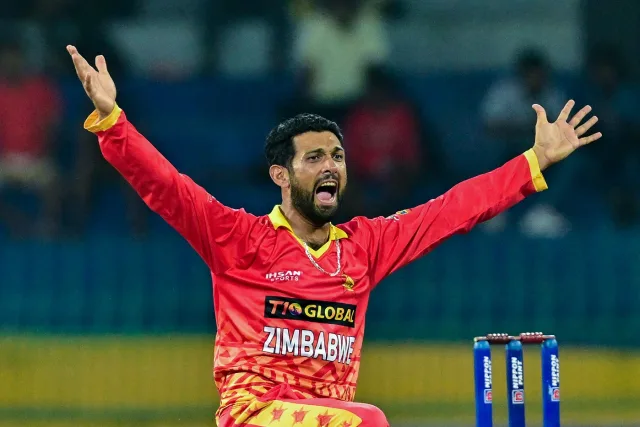
Raza Warns Zimbabwe Must Act Fast to Avoid Post-2027 Decline
Zimbabwe captain Sikandar Raza believes the national side is moving in the right direction but has warned that a lack of consistency and delayed succession planning could leave the team vulnerable once its senior core moves on.
As Zimbabwe prepare for their opening match of the 2026 ICC Men’s T20 World Cup against Oman, attention is already drifting towards a bigger challenge on the horizon: the 2027 ODI World Cup, which Zimbabwe is set to co-host. For Raza, the tournament represents both opportunity and urgency for a side standing at a crossroads.
At the heart of Zimbabwe’s current squad remains a veteran trio that has symbolised resilience for nearly two decades — Raza himself, Brendan Taylor, and Graeme Cremer. But while their presence offers stability, it also underlines the uncertainty of what comes next.
Taylor returned to international cricket in 2025 after serving a three-and-a-half-year ICC suspension, while Cremer ended a seven-year absence in a final bid to contribute. Together with Raza, the ICC’s top-ranked T20I all-rounder, they form a “last dance” generation whose eventual departure threatens to leave a significant experience void.
The challenge, Raza cautioned, is magnified by rapid global change. The traditional gap between Full Members and Associate nations has narrowed sharply, fuelled by the rise of franchise cricket and increased exposure for emerging teams.
Early matches in the ongoing World Cup have reinforced that reality. The Netherlands pushed Pakistan to the brink, India required late heroics from Suryakumar Yadav to overcome the United States, and Nepal fell just four runs short of defeating England. All this, Raza noted, despite Associate nations having fewer opportunities against elite opposition.
“First of all, I do think all the Associate nations have caught up with the T20 format with the Test nations, especially maybe from seven to eleven,” Raza said. “So credit to all the Associate countries for how they have grown in T20 cricket. Hopefully the game keeps spreading and the gap becomes even smaller.”
Raza pointed to franchise leagues as a key driver of that progress, allowing Associate players to gain experience in high-pressure environments and bring those lessons back home. Without careful planning, Zimbabwe risk being overtaken by sides such as Namibia or the Netherlands, who now benefit from similar development pathways.
To prevent that scenario, Raza believes Zimbabwe have roughly 20 months to manage a smooth transition — beginning now rather than after senior players retire.
“Development and growth is a very important stage of any youngster,” he said. “If it’s up to me, I’ll sit down with the board and plan a way forward rather than rush them in. You can’t just chuck a youngster in because three senior guys are leaving. It doesn’t work like that.”
He stressed the importance of structured progression through academy systems and A-team tours, while acknowledging that exceptional talents may occasionally fast-track their development.
Encouraging signs already exist. Brian Bennett has emerged as a standout prospect, scoring centuries across formats and topping the run charts in recent qualifiers. Tadiwanashe Marumani and Dion Myers have also shown glimpses of the consistency required to form the backbone of a post-2027 side.
Yet Zimbabwe’s position near the bottom of the ICC rankings reflects how much work remains.
“Every time we play against the Test nations, they’re above us for a reason,” Raza said. “Last year we weren’t winning consistently, but we were competitive against almost every nation. We managed wins in tri-series and in home series against Asian teams.”
For Zimbabwe, the coming months will be crucial. With legends still leading the charge and a new generation waiting in the wings, the task now is to ensure the transition is measured, deliberate, and strong enough to keep pace with a rapidly evolving cricketing world.