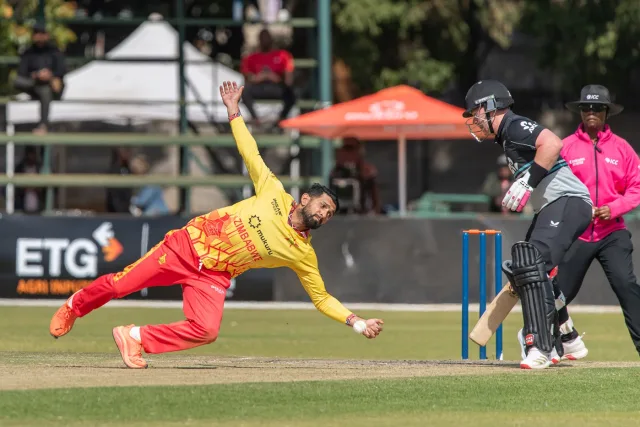
Associate Nations Have Caught Up in T20 Cricket, Warns Raza as Zimbabwe Face Crucial Transition
As Zimbabwe prepare to open their 2026 ICC Men’s T20 World Cup campaign, their immediate focus on results is inseparable from a larger, looming reality — the uncertain future of a team still anchored by its greatest modern legends.
At the core of the current Zimbabwe side is a veteran trio that has embodied the nation’s resilience for nearly two decades: Sikandar Raza, Brendan Taylor, and Graeme Cremer. Together, they represent both stability and a ticking clock.
Taylor returned to international cricket in 2025 after serving a three-and-a-half-year ICC suspension, while Cremer recently came out of a seven-year international hiatus in a final attempt to contribute. Raza, now the ICC’s top-ranked T20I all-rounder, remains the side’s heartbeat. But their continued presence also underlines a growing concern — the lack of experienced replacements ready to take over once this generation exits.
That concern is magnified by the rapidly evolving global landscape of T20 cricket. According to Raza, the gap between lower-ranked Full Members and Associate nations has narrowed significantly, driven largely by the rise of franchise cricket.
“I do think all the Associate nations have caught up with the T20 format with the Test nations rated maybe from seven to eleven,” Raza said ahead of Zimbabwe’s tournament opener against Oman. “Credit to them for how they’ve grown. Hopefully the game keeps spreading and the gap becomes even smaller.”
Early matches at the ongoing T20 World Cup have reinforced that point. The Netherlands pushed Pakistan to the brink, the United States ran India close before Suryakumar Yadav intervened, and Nepal narrowly missed a famous upset against England — all despite Associate nations having limited access to high-level international fixtures.
Franchise leagues, Raza believes, have played a central role in this shift.
“A lot of Associate cricketers now get franchise opportunities, take those lessons back home, and that’s brought T20 cricket much closer globally,” he said.
For Zimbabwe, the implications are stark. With the country set to co-host the 2027 ODI World Cup, there are roughly 20 months to manage a delicate transition — developing new talent without rushing them into international cricket unprepared.
“Development is a very important stage for any youngster,” Raza said. “You can’t just throw someone in because three seniors leave. There are A-tours, academy tours — that pathway matters. If someone is exceptional, they can skip stages, but it shouldn’t be rushed.”
Signs of promise do exist. Brian Bennett has emerged as a standout prospect, scoring centuries across formats and leading run charts in recent qualifiers. Tadiwanashe Marumani and Dion Myers have also shown glimpses of consistency. But flashes of talent alone may not be enough to secure Zimbabwe’s future competitiveness.
Currently hovering near the bottom of ICC rankings, Zimbabwe have struggled for sustained success, though Raza insists progress is being made.
“When we play Test nations, they’re above us for a reason,” he said. “But last year we were finding wins — in tri-series, home series, against Asian teams. We weren’t consistent, but we were competing.”
The coming months will determine whether Zimbabwe can convert that competitiveness into continuity. For the veteran core, the goal is clear: ensure the foundation they built does not crumble after their departure.
“In my heart, I feel we’re on the right track,” Raza said. “We just need consistency. Then you won’t say we’re nearly there — you’ll say we’re here.”
Zimbabwe may indeed be on track. But with Associate nations closing in fast, standing still is no longer an option.