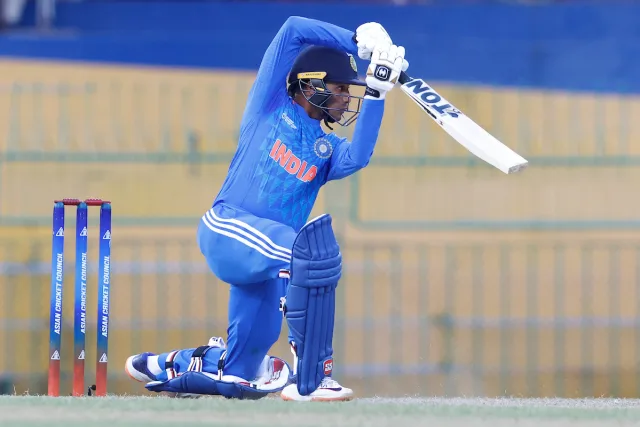
Intent Over Insects: Why India Isn't Sweating Abhishek Sharma's Twin Ducks
In the high-stakes theater of the T20 World Cup, a pair of ducks usually signals a crisis. But for India’s batting coach Sitanshu Kotak, Abhishek Sharma’s recent run of zeros is less a red flag and more a byproduct of the "high-risk" brand of cricket the team has embraced.
As India prepares to face the Netherlands at the Narendra Modi Stadium on Wednesday, all eyes were on the young opener during Tuesday’s grueling net session. If intensity had a sound, it was the sharp ‘thhak’ of Abhishek’s bat echoing through the media centre glass, a 120-meter distance rendered irrelevant by the sheer force of his strokeplay.
Net Intensity and "Baseball Style"
The session began with a spicy face-off against Arshdeep Singh. Distracted early on by a group of flag-waving fans near the sight screen, Abhishek initially struggled for rhythm. However, once he realized the fans weren't moving, he adjusted his stance—shifting from leg-stump to off-stump—and unleashed what can only be described as a "baseball-style" assault.
Arshdeep was dispatched down the ground three times in a row before finally besting the opener with a slower ball. The exchange ended with a high-five and a quick equipment change, but the real test was yet to come.
Coach Gautam Gambhir soon stepped in, personally overseeing a 30-minute simulation designed to neutralize the threat of Dutch off-spinner Aryan Dutt. Facing a "battery of spinners" including Kuldeep Yadav and Varun Chakravarthy, Abhishek was tasked with maintaining his ultra-aggressive approach against imaginary fields.
The Statistics of Success
Despite the lack of runs in this tournament, Abhishek’s pedigree remains undisputed. Since the start of 2024, his numbers against spin are the gold standard of the format:
| Metric | Abhishek Sharma vs. Spin (T20Is since 2024) |
| Strike Rate | 206.59 (Highest in the world*) |
| ICC Ranking | World No. 1 T20I Batter |
| Recent Form | 314 runs in 2025 Asia Cup (Record) |
| Minimum 100 deliveries faced. |
"The one thing we definitely don't unnecessarily do is over-analyse," Kotak told reporters. "T20 is high-risk. If we stress so much on occasional failures, players will be under pressure. He has clear plans and a clear mindset—that’s what matters to us."
Contextualizing the Slump
It hasn't just been a matter of technique; luck and health have also played their parts. Between his dismissals against the USA and Pakistan, Abhishek was hospitalized with a severe stomach infection that forced him to miss the game against Namibia.
-
vs. USA: Picked out the lone fielder at deep cover.
-
vs. Pakistan: Mishit a spinning delivery from Salman Agha to mid-on.
While former Pakistan coach Mike Hesson claimed to have spent three days planning Abhishek’s downfall, Kotak brushed off the suggestion. "If they're so concerned that they have to plan that much, it's a great sign for us," he laughed.
Adapting to the Situation
The team management’s faith in "intent" doesn't mean a lack of flexibility. Kotak cited Suryakumar Yadav’s match-winning 84* against the USA—where the captain moved from a precarious 77/6 to a winning total—as the blueprint for "playing the situation."
For Abhishek, the mandate remains: stay aggressive, but stay smart. As India eyes the Super Eights, the message from the dugout is clear—one big "thhak" is all it takes to turn a drought into a deluge.